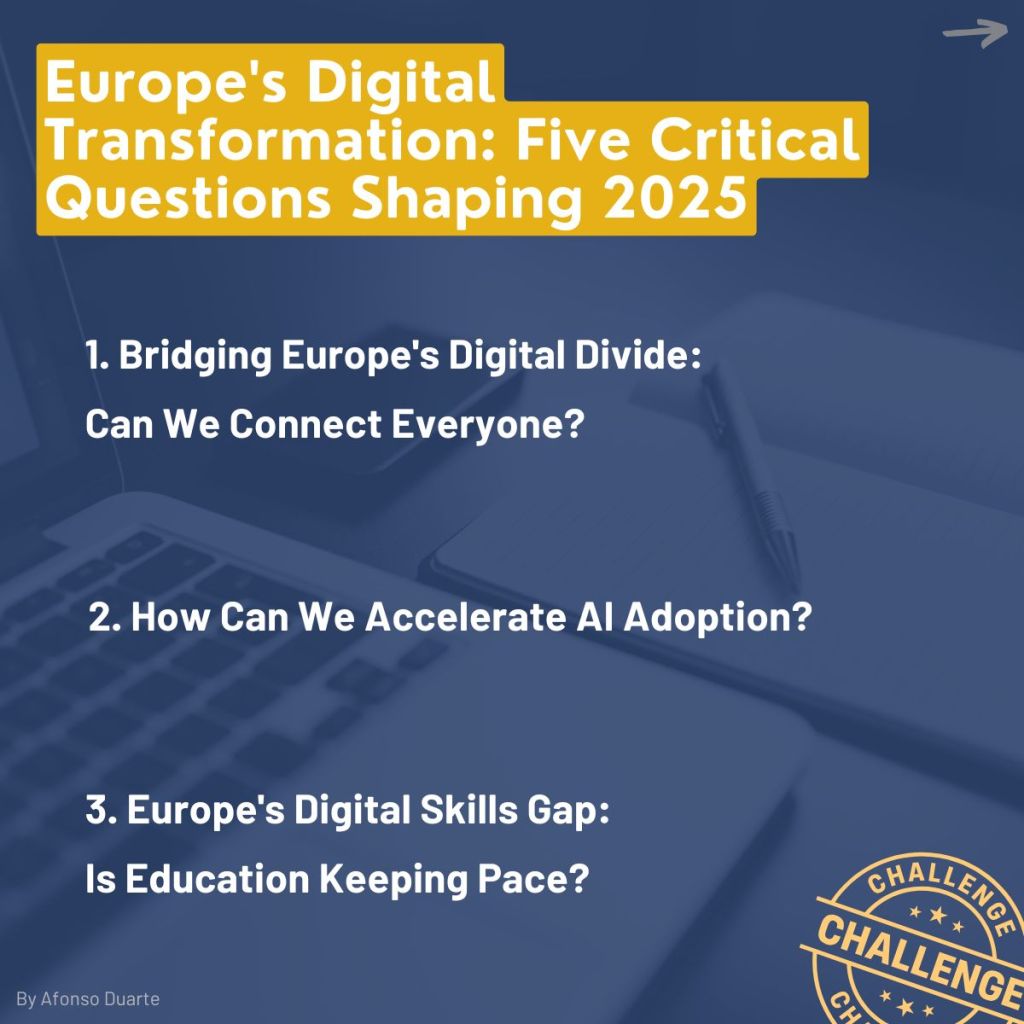
Europe stands at a pivotal point in its digital transformation journey. While the continent has made significant advances in digital innovation and adoption, it also faces critical challenges that could hinder its progress and exacerbate existing inequalities. As we approach 2025, five key questions ask for attention, demanding innovative solutions and collaborative action to ensure an inclusive and sustainable digital future for all Europeans.
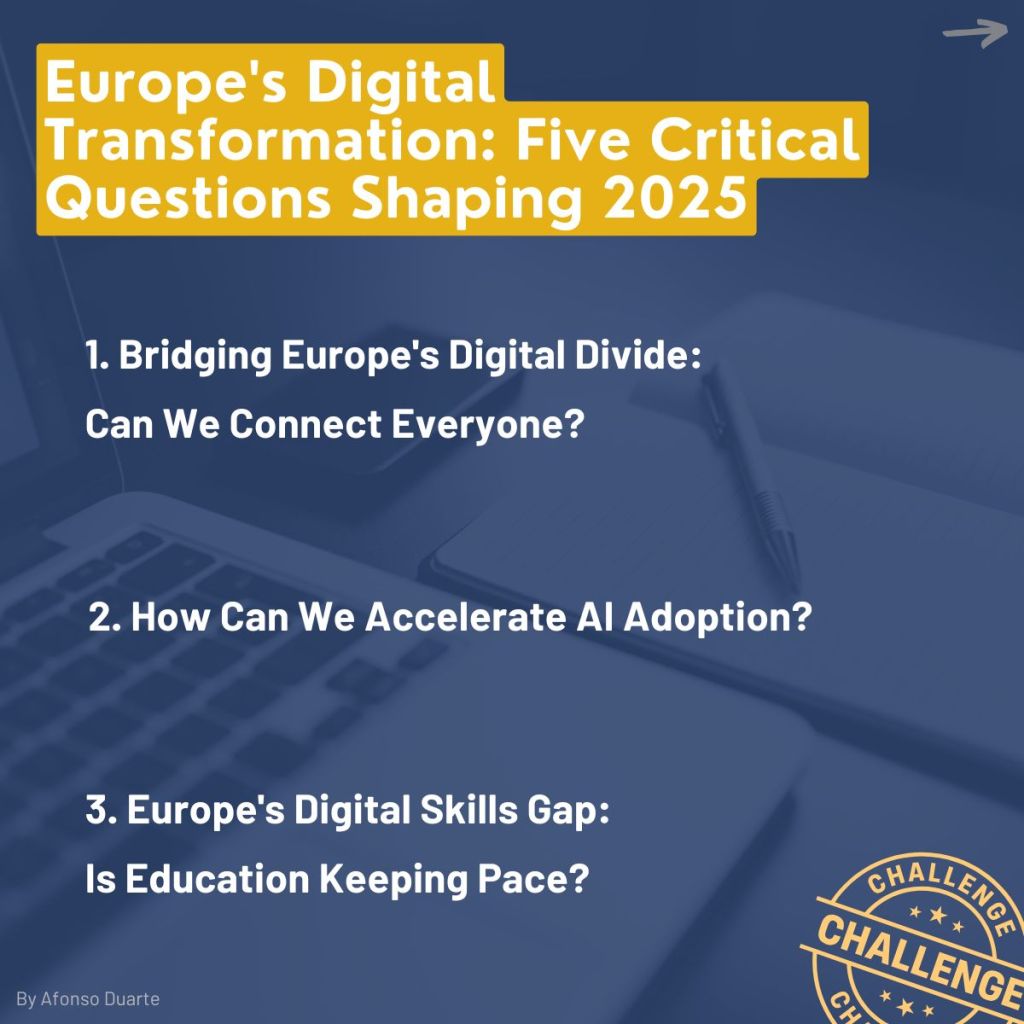
1. Bridging Europe’s Digital Divide: Can We Connect Everyone?
Despite widespread efforts to expand digital access, Europe continues to struggle with a persistent digital divide. Regional disparities in infrastructure, urban-rural connectivity gaps, and socioeconomic barriers exclude many communities from the benefits of the digital economy. This divide is not merely a technological issue; it has profound social and economic consequences, limiting access to education, healthcare, employment opportunities, and civic participation.
To bridge this gap, Europe needs a multi-pronged approach. Public-private partnerships are crucial to invest in high-speed internet infrastructure, particularly in underserved rural areas. Digital literacy programs must be expanded to empower individuals with the skills and confidence to navigate the digital world. Targeted initiatives are also needed to address the specific needs of vulnerable groups, such as the elderly, low-income households, and people with disabilities.
2. How Can We Accelerate AI Adoption?
Artificial intelligence (AI) holds immense potential to transform industries, boost productivity, and address societal challenges. However, Europe lags behind other regions in AI adoption, particularly among small and medium-sized enterprises (SMEs). In 2023, only 8% of European enterprises reported using AI, limiting their competitiveness and innovation potential.
To accelerate AI adoption, Europe must address practical barriers, such as lack of awareness, limited access to talent and resources, and concerns about data privacy and security. Upcoming AI regulations, while crucial for ensuring ethical and responsible AI development, must also be carefully designed to avoid stifling innovation. Democratizing access to AI tools and knowledge through initiatives like AI test beds, training programs, and funding opportunities will be essential to empower SMEs and drive widespread adoption.
3. Europe’s Digital Skills Gap: Is Education Keeping Pace?
As the digital economy expands, the demand for digital skills is skyrocketing, creating a significant talent shortage across Europe. This skills gap threatens to hamper innovation, productivity, and economic growth. Aging workforce demographics further exacerbate the challenge, as older workers may lack the necessary digital skills to adapt to the evolving job market.
Addressing this crisis requires a comprehensive approach encompassing education, immigration, and workforce development. Educational systems must be reformed to equip students with essential digital skills from an early age. Immigration policies should facilitate the entry of skilled tech workers to fill critical talent gaps. Innovative upskilling and reskilling programs are also needed to empower existing workers with the digital competencies required for the jobs of the future.
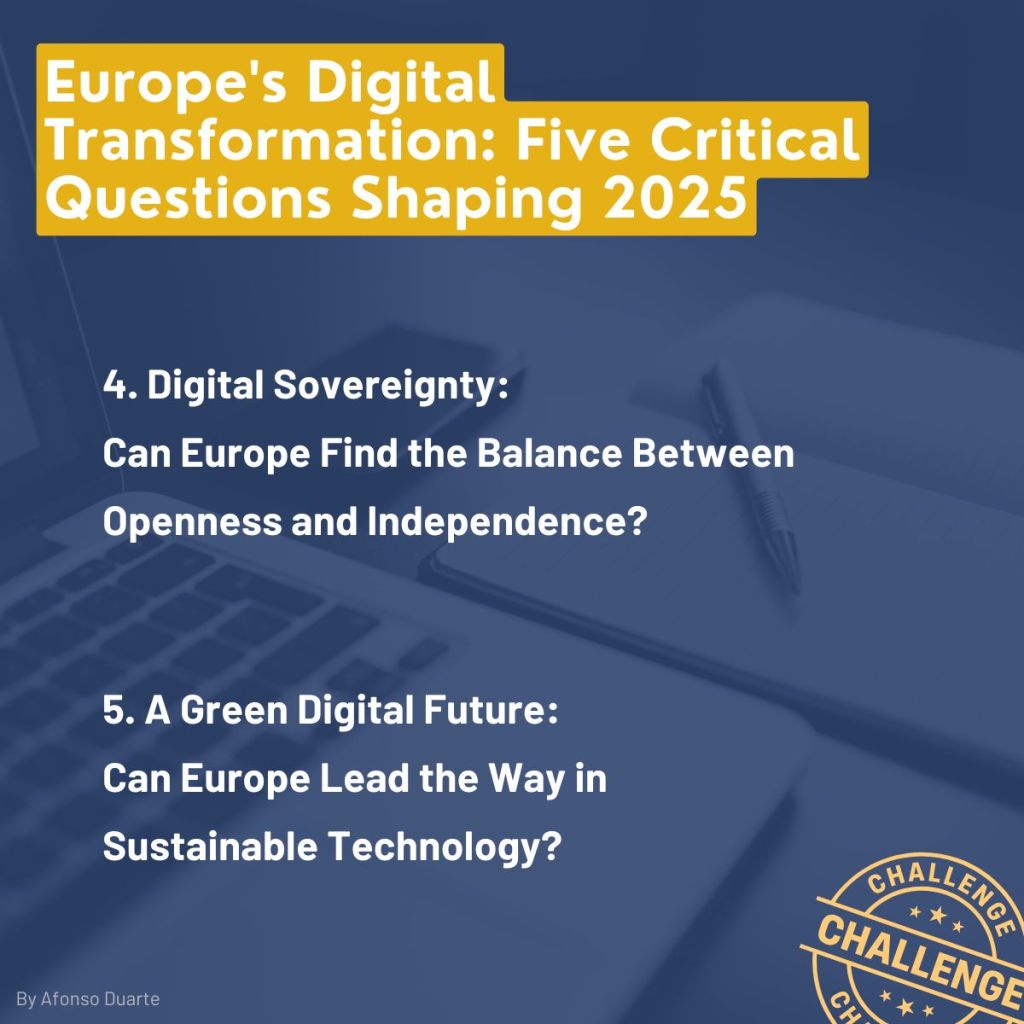
4. Digital Sovereignty: Can Europe Find the Balance Between Openness and Independence?
In an increasingly interconnected world, Europe faces the challenge of balancing digital sovereignty with the need for international collaboration and innovation. The evolution of European cloud infrastructure, data localization requirements, and competition with global tech giants are key considerations in this balancing act.
Europe must invest strategically in its own digital infrastructure, including cloud computing, data centers, and connectivity networks, to reduce reliance on foreign providers and ensure data security. At the same time, it must foster an environment that encourages innovation and attracts global talent and investment. Striking the right balance between independence and openness will be crucial for Europe’s digital competitiveness and strategic autonomy.
5. A Green Digital Future: Can Europe Lead the Way in Sustainable Technology?
Europe has a unique opportunity to lead the way in sustainable digitalization by integrating its ambitious Green Deal objectives with its digital transformation agenda. This requires a holistic approach that considers the environmental impact of digital technologies throughout their lifecycle, from manufacturing to disposal.
Key areas of focus include energy efficiency in digital infrastructure, applying circular economy principles in the tech sector, and supporting SMEs in sustainable digital transitions. Ensuring environmental justice in the digital transition is also critical, so that the benefits of digitalization are shared equitably and vulnerable communities are not disproportionately impacted by its environmental footprint.
Europe’s digital transformation presents both immense opportunities and significant challenges. By addressing these five critical questions, can we forge a path toward equitable and sustainable digital leadership, ensuring that all its citizens and businesses thrive in the digital age? This will require collaborative action from policymakers, businesses, civil society, and individuals, working together to build a digital future that is inclusive, innovative, and environmentally responsible.


